
"Conductive Education – Learning for a living

It’s not so much a “therapy”, as a way of learning new ways of doing things. Andrew Sutton explains the ins and outs of Conductive Education, and what it might do for you and your family.
“I was very sceptical of trying this treatment as I thought – how can any intervention help me now at my age?” says 51 Maria, who has cerebral palsy. She has continued with sessions of Conductive Education for five years. “My general well-being, self esteem and confidence are vastly improved. I don’t feel as exhausted as I did and have more energy. I have learnt so much about cerebral palsy and now understand how my body functions.”
Maggie from Hull, a former teacher and education advisor, was diagnosed with MS in 1994, and was equally sceptical of the claims made about Conduction Education. “From the start, I was struck by the way the conductors worked in such a precise and focused way,” she explains. “I was dumbfounded when – from the very first session – I was able to do things I thought I just couldn’t do. For anyone outside the MS world, it might seem that my new-found – or should that be re-found? – ability to stand, my better balance and control, plus improved co-ordination and circulation, are minor. But I feel these things represent a significant move away from a passive role in the disease’s progression. I am now playing a much more positive part. I have some control over what is happening to me now.”

New Zealander John, who had a stroke at the age of 44 that left him paralysed down his right side and with speech and cognitive problems, believes that he wouldn’t have made the progress and achievements he has without the input of Conductive Education. “The result – besides the physical improvement, like speech balance and walking – has been a vast improvement in my confidence with people and the awareness that life goes on after disability,” he says. “I am able to drive, hold down a job five days a week and do most of the maintenance and day to day chores around the house. If I was to sum up my experience at Conductive Education, it has helped me gain my independence, confidence and pride back in myself and it has given me the awareness of what I am capable of achieving.”
People with Parkinson’s disease and other rarer movement disorders have testified in a similar manner. So, what’s going on here?
HOME TRUTHS
Behind Conductive Education – sometimes called “conductive rehabilitation” – lie simple, human truths: that people with difficulties controlling their movements can learn different ways of approaching what they want to do; that they will learn better if they enjoy the process and the success that it brings, and that they’ll do best under the guidance of skilled and motivating teachers.
Conductive Education’s breakthrough is applying these truths to difficulties that physical impairments bring to everyday life and living. Specially trained “conductors” bring together in one person different elements needed to learn to solve new problems and complete new tasks.
Like any good learning and teaching, how this is done in particular circumstances depends on a mixture of factors; what you want to learn to do, how much time and energy you have, where you’re starting from and what you’re aiming to achieve. There are also questions about the resources and personal teaching styles of individual conductors.
A ROUGH GUIDE TO CONDUCTIVE EDUCATION
While Conductive Education can differ for different people in different places, there remain some easily identifiablefeatures.
• You’ll be struck by the conductors’ immediate and persisting confidence that you can learn.
It may take time to find out how, and the best ways to teach you, but the only way to do this is to begin – showing, explaining, teaching. It will be surprising if you leave your first meeting with a conductor without taking away something new, however small – and without some of the conductor’s confidence beginning to rub off on you. This is the start of establishing your confidence (first in the conductor then increasingly in yourself).
• You’re not “doing Conductive Education” alone.
You’ll learn as part of a small group, since group learning is often much more fun and much more effective than “one to one”. You will be taking part in a social activity, along with others – including conductors – who’ll share the activities with you, including the difficult bits. Many people have experienced the positive effects of working together as a team in other walks of life, and this way of working still enables you to receive highly personalised teaching.
• The room will be sparse, almost empty.
This is no place for specialised “therapy equipment”; you’ll find simple wooden furniture and perhaps a few everyday items – such as paper and pencils – if needed for specific tasks. The highest technological mechanism known is the human mind – and you, your fellow learners, your conductors and your family, will bring this incomparable asset along with you free of charge!
• What happens is what matters.
Conductive Education is about active and positive teaching and learning. Conductors do not sit quietly; they move around, they lead, and they speak. A lot; encouraging, instructing, rewarding, questioning binding the group together, providing motivation, rhythm and meaning essential for learning human movement.
This is work, lively and cheerful work, ‘disciplined’ in the best sense of the word. You soon begin to sense that conductors ‘understand’ how your body works together as a whole, more importantly how you can take control of this to achieve things that you could not previously manage. As you proceed together so this knowledge will be transferred across to you. You learn.
• Time spent with the conductor in the group is a ‘session’.
Sessions with your conductor will last an hour or so; they’re social occasions, so you’re likely to spend some informal time – over tea and biscuits – beforehand or afterwards (or both!) with family, carers, fellow-group members and their families, conductors, and other staff. People working hard together on a common task soon find that they have lots to talk about! This chance for further bonding, information-sharing etc is an important part of the conductive experience.


HOW OFTEN, AND WHERE
Ideally, this depends on who you are, your condition, your family situation, and what you want to achieve – all very human questions.
Disability is for life; ideally, so should access to Conductive Education. This doesn’t mean attending every day – it could mean attending weekly meetings or just once in a while. Or, alternatively, attending for a period measured in weeks or months, stopping for a while and then returning for a “top up” if circumstances change.
Admittedly, in our less-than-ideal world, what you’ll get may well depend not on what you and your conductor consider is required, but on how much can be afforded. There is no routine public funding for adults in the UK, although a few enlightened local authorities provide funding for some centres. For the most part, though, Conductive Education in the UK is paid for by charities or by disabled people themselves and their families.
NOT A THERAPY

Conductive Education is not “hands-on”. It is a psychological and social method, achieving psychological and social outcomes. There is no physical manipulation and the target is not the limbs, the joints or the muscles – it’s the mind.
If you must think of it as a therapy, think of it psycho-therapy, but conductors prefer to think of it as teaching and learning. The focus is people’s morale, their self-image and self-confidence. It’s about helping them set new goals and find new ways to achieve existing ones by teaching new skills, providing reassurance and encouragement, and supporting new-found confidence.
Nor is it just about the disabled person. The changes Conductive Education bring can change family life too – for the better.
As Mary from Australia explained: “Conductive Education teaches people how they might better take charge of their own bodies in order to achieve what they themselves want. It does not set out to ‘cure’ anything, but to help people to live their lives.”
MORE INFORMATION
There are currently 12 conductive services working with adults in the UK; some are small one-man/woman bands, while the biggest is the National Institute of Conductive Education (NICE), which is located in Birmingham. NICE also trains conductors.
http://ce-library.blogspot.com/2009/02/adult-conductive-education-on-internet.html
http://ce-library.blogspot.com/2009/02/what-has-conductive-education-done-for.html
Alternatively, call Gill Maguire on 0121 449 1569."
Reference: Able Magazine
http://ablemagazine.co.uk/conductive-education-learning-for-a-living/#more-415
Photos: Andrew Sutton a now retired director of the Foundation for Conductive Education.
http://www.conductive-world.info/
http://www.facebook.com/conductive.world
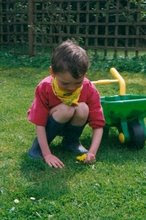
Captures of the work at the National Institute of Conductive Education published in Able Magazine along with the article.






 Posts
Posts


